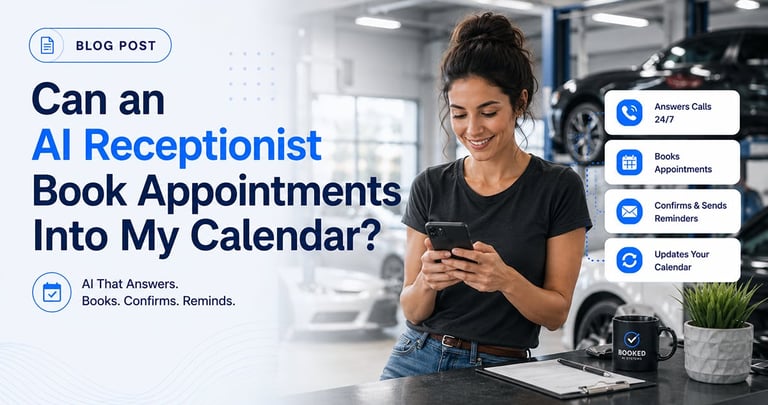
Yes — An AI receptionist can answer calls, check your calendar, book appointments, collect customer information, and send you a notification—all without interrupting your work.
Written by Christopher Pike, founder of Booked AI Systems.
Yes. An AI receptionist can connect to your calendar, speak naturally with callers, collect the information needed for the appointment, check availability, and book the customer directly into an open time slot.
For many small businesses, this is one of the most practical uses of an AI receptionist. It does more than answer questions or take a message. It can move the customer from the first phone call to a confirmed appointment without requiring the business owner to stop working and answer the phone.
The setup is usually straightforward. The AI receptionist is connected to the business owner's preferred calendar and email system, such as Gmail and Google Calendar. The business information, appointment rules, services, availability, and other instructions are programmed into the agent before it is launched. Once everything is set up, the AI receptionist can handle booking conversations in a way that feels much more natural than a traditional automated phone menu.
If you're wondering where to start with automation, read our guide on which tasks to automate first.
The AI receptionist handles the conversation with the caller, asks the necessary questions, checks the calendar, and books an available time.
A typical conversation might include:
The customer does not need to leave a voicemail and wait for a callback. The business owner also does not need to stop working to open the calendar and manually schedule the appointment. The appointment can be completed during the original call.
Before the AI receptionist begins answering calls, it needs to be trained on how the business operates. I compare this to training a new employee on a specific task. The difference is that setting up the AI receptionist can take only a few minutes once the required information has been collected.
The agent can be programmed with details such as:
The quality of the booking experience depends heavily on the quality of this setup. The AI receptionist should not be launched without clear instructions. It needs to understand what it can book, when it can book it, what information it must collect, and when it should pass the conversation to a person.
One thing I really like about this approach is that once the setup is done, it keeps working consistently. Unlike a human employee who might have an off day or forget a step, the AI follows the same process every single time.
A good example is the business that handles my vehicle window tinting. The owner is a one-man operation. He works alone and often has both hands occupied while installing window tint. When he is working on a vehicle, he cannot always stop what he is doing to answer the phone.
This creates a serious problem because window tinting customers often call several businesses from Google. When one business does not answer, the customer may not wait for a callback. Even when the call goes to voicemail, the customer may simply call the next window tinting company in the search results. The business may lose the appointment before the owner even knows someone called.
An AI receptionist changes that situation. The agent can answer the call while the owner continues working. It can ask the customer:
Depending on how the agent is programmed, it may also be able to provide an estimated quote based on the vehicle and requested service.
The agent checks the connected calendar, books the appointment, and sends the business owner an immediate notification with the customer's information and appointment details. The owner can continue working without interrupting the installation, while the customer receives help immediately.
"That is where an AI receptionist provides real value. It does not simply answer the phone. It helps prevent an interested caller from becoming a missed opportunity."
An AI receptionist can provide pricing information when the business has clear pricing rules.
For example, a window tinting business may have different prices based on:
If those rules are programmed into the agent, it can ask the customer the right questions and provide an appropriate price or estimate.
"Missed calls often become missed customers."
However, the business should decide carefully whether the AI receptionist should provide a fixed quote, an estimated price, or simply collect the information for the owner. Some services are straightforward enough for automatic pricing. Others require an inspection, photographs, measurements, or professional judgment.
In those cases, the AI receptionist can explain that the final quote must be confirmed by the business. The goal is not to make the AI pretend to know something it does not know. The goal is to give it clear boundaries so it can be helpful without giving inaccurate information.
Not every call follows a simple script. A customer may ask about a service the business does not offer. They may request an unavailable appointment time, ask a complicated question, or describe a situation that requires human judgment.
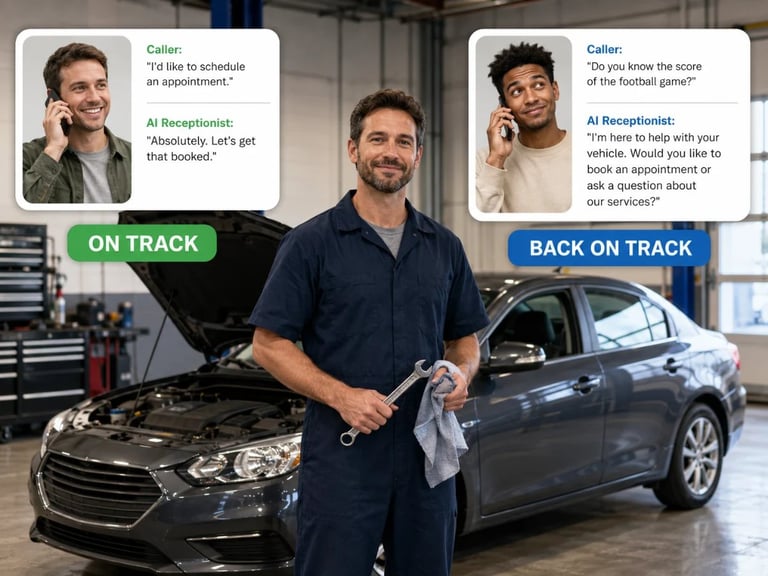
A properly configured AI receptionist should be able to guide the conversation back toward the task it was designed to complete. For example, it can:
The handoff option is important. An AI receptionist should not trap the caller inside an automated conversation. When the caller needs help from a person, the agent can provide a route to direct contact with the business owner or an associate. This can include transferring the call, sending a message, collecting callback information, or notifying the business that a customer needs personal assistance.
In my experience, the businesses that get the most value from an AI receptionist are the ones that plan for these edge cases upfront. A well-configured handoff path turns a frustrated caller into a satisfied customer.
In my opinion, the best way to think about an AI receptionist is not as a complete replacement for every human receptionist. It works best as an additional receptionist that is available when the business owner or staff cannot answer.
For a small business owner, this may be while they are:
For a business that already has a receptionist, the AI can step in when the real receptionist is already speaking with another customer. A human receptionist can only handle a limited number of conversations at one time. When several calls arrive close together, additional callers may be sent to voicemail or placed on hold.
The AI receptionist can help answer those overflow calls, collect the necessary information, and book appointments without making the customer wait. The human receptionist can then focus on conversations that require personal attention, judgment, or more complex assistance.
"An AI receptionist doesn't replace your receptionist — it answers when nobody else can."
| Traditional Receptionist | AI Receptionist |
|---|---|
| Business hours only | 24/7 availability |
| One call at a time | Handles multiple callers |
| Needs breaks and time off | Always available |
| Manual scheduling | Automatic booking into your calendar |
| Salary, benefits, training | Fixed monthly cost |
| May forget details or make errors | Consistent, accurate data collection |
The AI receptionist works alongside your team — handling routine calls so your staff can focus on what matters most.
An AI receptionist works especially well for businesses that already receive phone calls but struggle to answer every one of them. This includes businesses where the owner or staff are frequently working with their hands, serving customers, travelling, or moving between job sites.
Examples may include:
The strongest use case is usually a business where a phone call can directly lead to a booking, estimate, consultation, or service appointment. If missed calls regularly turn into lost customers, calendar booking can make the AI receptionist much more valuable than a basic answering service.
There are situations where a human should still take over. These may include:
The AI receptionist should know its limits. A strong setup includes clear instructions for when to continue the conversation, when to collect information, and when to hand the caller to a person. The goal is not to remove people from the customer experience. The goal is to make sure routine calls are handled promptly while human attention remains available for situations that need it.
Once the customer selects an available time, the AI receptionist can place the appointment directly into the connected calendar.
The business owner can then receive a notification containing information such as:
The customer can also receive confirmation, depending on how the system is configured. This reduces the need for the business owner to listen to voicemails, return calls, write down information, and manually enter appointments. It also reduces the chance that customer details will be missed or entered incorrectly.
I've seen this make a real difference for one-person operations. Instead of finishing a job and then working through a list of voicemails, the owner already knows exactly who booked, when, and for what — without touching the phone.
An AI receptionist is most useful when the business is already receiving calls and those calls are difficult to answer consistently. If the phone rarely rings, the immediate value may be limited. The technology does not create demand by itself.
However, when a business is receiving genuine customer inquiries and missing them because nobody is available, an AI receptionist can address a very specific problem. It can answer the call, gather the details, check availability, book the appointment, and notify the business owner.
For a one-person business, that can mean fewer interruptions while working and fewer potential customers lost to voicemail. For a larger business, it can support the existing receptionist and handle calls that might otherwise go unanswered.
Curious how this would work for your specific business? Book a free strategy call and we'll walk you through it.
Yes, an AI receptionist can book appointments directly into a business calendar. It can speak naturally with callers, ask the required questions, check available times, create the appointment, and notify the business owner immediately.
The most effective systems are trained with clear business rules before launch and include a human handoff option for unusual or complicated situations.
In my experience, the best use of an AI receptionist is not to remove the human side of the business. It is to make sure customers receive an answer when the owner or receptionist is unavailable. When a potential customer is ready to book, answering the call at that moment can be the difference between securing the appointment and losing it to the next business on Google.
If your business is already receiving calls but you're missing them because you're busy working, driving, or helping another customer, appointment booking is usually one of the first automation tasks worth implementing. It solves a specific problem that directly affects new customer enquiries and revenue.
About the Author
Christopher Pike is the founder of Booked AI Systems. He partners with local service businesses to build smarter websites, strengthen their SEO and AI visibility, and implement practical automation that captures leads, answers customers faster, and supports steady growth. When he's not helping business owners work smarter, he's testing the latest AI tools to find what actually delivers results — so his clients don't have to.
Let our AI receptionist handle every call, qualify leads, and book appointments 24/7.
Learn more about our AI Receptionist →
Get a free consultation and see how an AI receptionist can transform your business.